12 Mexican Slang Words You'll Actually Hear Every Day
Learn 12 Mexican slang words locals really use, from güey to ahorita, with real dialogue lines, cross-country warnings, and a quick self-test quiz.
Nativia Team

I did three years of classroom Spanish before landing in Mexico City. In my first taquería conversation I understood maybe half the words, and the missing half was all slang. Nobody warns you that real Mexican Spanish runs on about a dozen words your textbook never mentions.
Here they are, with what they mean, how locals use them, and which ones will confuse you in other countries.
Quiz ahead: There is a short self-test at the end of this article. The ahorita question fools almost everyone.The three you'll hear in the first hour
Güey (often spelled wey) means dude or man. It comes from buey, the standard Spanish word for ox, but nobody thinks of cattle anymore. Friends drop it into every second sentence: ¿Qué onda, güey? ¿Vamos por unos tacos? (What's up, dude? Want to go for some tacos?) That greeting, qué onda, literally "what wave", is the default casual hello.
Chido means cool: La fiesta estuvo bien chida. (The party was really cool.)
Padre also means cool in Mexico, even though standard Spanish padre means father. ¡Qué padre tu departamento! (Your apartment is so cool!) Say that in Madrid and you'll get a puzzled look. Spaniards say qué guay instead.
Reaction words that make you sound local
Neta means truth, and as a question it means "really?": ¿Neta te vas a vivir a México? (Are you really moving to Mexico?) La neta is the honest truth, as in "honestly, the tacos at the corner are better."
No manches is the all-purpose "no way!": No manches, ¿ganaste el sorteo? (No way, you won the raffle?) It has a vulgar cousin, no mames, which friends use constantly but you should not try at your host family's dinner table.
Órale flexes with your tone. Flat, it means "okay, deal": Órale, nos vemos a las ocho. (All right, see you at eight.) Excited, it means "wow!"
Aguas literally means waters, but shouted it means watch out. The story goes back to colonial times, when people yelled it before emptying buckets out of windows. ¡Aguas con el escalón! (Watch out for the step!)

Reading is step one. Speaking is what makes it stick.
Practice this in a real conversation, with instant feedback.
Words that mean something else across the border
Chela is a beer: ¿Nos echamos unas chelas al rato? (Should we grab some beers later?) In Spain you'd order a caña, in Colombia a pola.
Crudo is standard Spanish for raw. In Mexico it means hungover: Estoy bien crudo, ayer fue el cumpleaños de Luis. (I'm really hungover, yesterday was Luis's birthday.) In Spain hungover is tener resaca, and crudo just means your steak is undercooked.
Fresa is standard Spanish for strawberry. In Mexico it describes a preppy, spoiled, brand-obsessed person: No seas fresa, el puesto de la esquina es buenísimo. (Don't be so preppy, the corner food stand is amazing.) Colombians say gomelo, Spaniards say pijo.
Watch out: these three are innocent words elsewhere, slang in Mexico.
- Padre means father in most countries, cool in Mexico.
- Crudo means raw food elsewhere, hungover in Mexico.
- Fresa means strawberry elsewhere, a posh snob in Mexico.
Ahorita, the most elastic word in Mexico
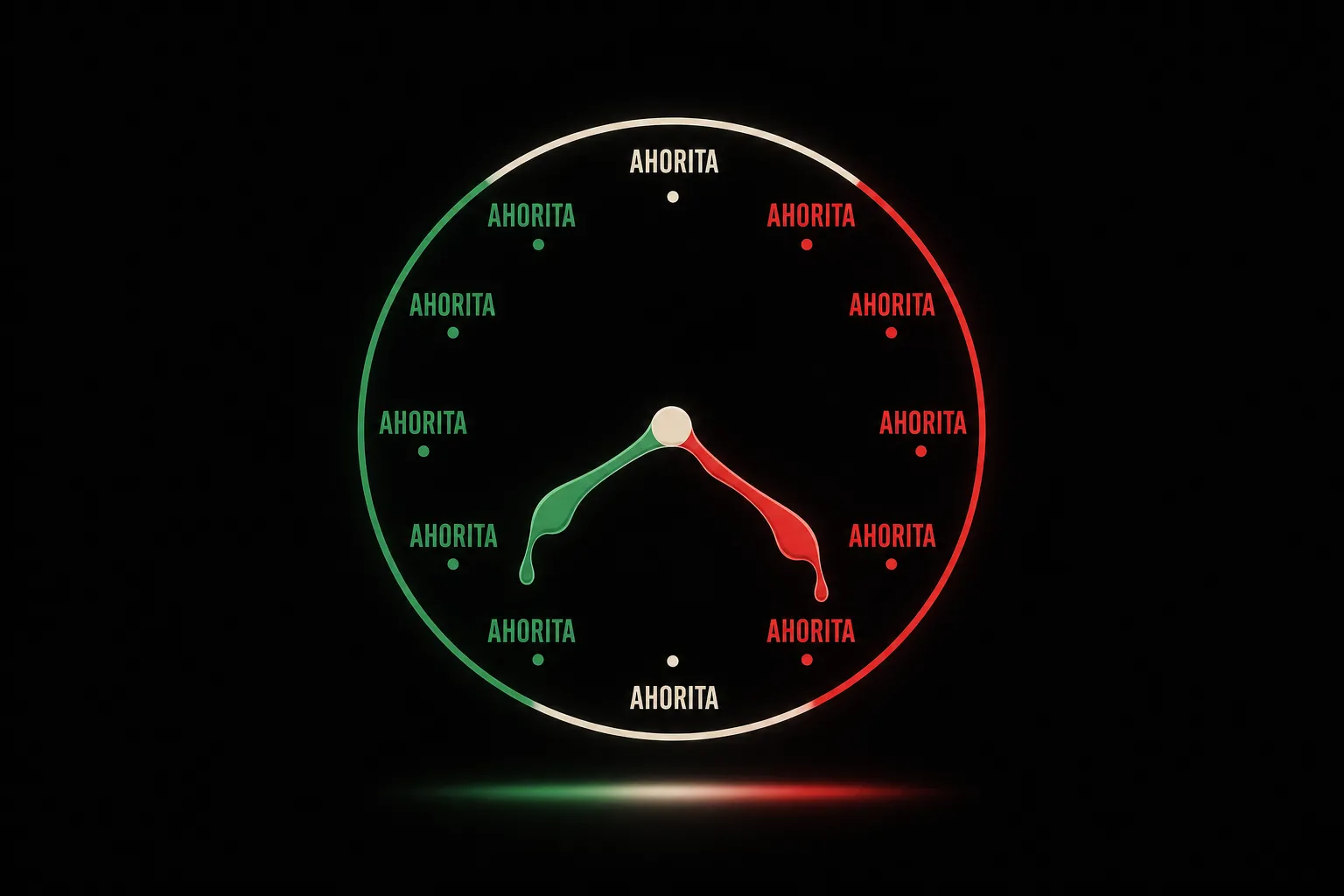
Ahorita is the diminutive of ahora (now), so logic says it should mean "right now". In practice it covers anything from "immediately" to "at some undefined point, possibly never". Ahorita lo hago. (I'll do it in a bit.) If a plumber tells you ahorita voy, do not cancel your plans.
Don't just memorize it. Say it out loud today.
Nativia turns what you just read into real conversations.
Test yourself
Five quick situations. Pick your answer, then check.
Pick the best answer for each situation, then check your answers.
1.Your taxi driver shouts: ¡Aguas, hay un tope adelante! What is he telling you?
2.A friend texts: Estoy bien crudo, hoy no salgo. What happened to him?
3.¡Qué tu casa nueva, güey!
Your new house is so cool, dude!
4.Your friend says: ¡Me gané un viaje a Cancún! What do you reply?
5.¿Nos tomamos unas después del trabajo?
Should we have some beers after work?
6.Your roommate says: Ahorita lavo los trastes. When will the dishes get washed?
Your Mexican slang cheat sheet
12 everyday Mexican slang words
| Word | Meaning | Where you'll hear it |
|---|---|---|
| güey / wey | dude, man | Mexico, very informal |
| qué onda | what's up | Mexico, Central America |
| chido | cool, great | Mexico |
| padre | cool (father elsewhere) | Mexico only |
| neta | truth, really? | Mexico |
| no manches | no way! | Mexico |
| órale | okay / wow / let's go | Mexico |
| aguas | watch out | Mexico, Central America |
| chela | beer | Mexico, parts of Central America |
| crudo | hungover (raw elsewhere) | Mexico |
| fresa | preppy, posh person (strawberry elsewhere) | Mexico |
| ahorita | in a bit, eventually, maybe never | Mexico, softer meanings elsewhere |
Learn how people actually talk
Textbooks won't teach you this. In Nativia, the characters speak with real accents and real slang. Start talking with them today.
FAQ
Is güey rude?
Between friends of similar age it's completely normal, like "dude". Avoid it with strangers, elders, bosses, or anyone serving you. Let the other person use it first, then mirror them.
Can I use Mexican slang in Spain or Argentina?
You'll be understood thanks to Mexican movies and shows, but you'll sound like a tourist quoting a Netflix series. Words like chido and padre are distinctly Mexican. Learn the local equivalents when you travel, like guay in Spain.
What's the difference between chido and padre?
Almost none in meaning, both mean cool. Chido skews a bit younger and more street, padre is safe with every generation, including your friend's grandmother.
Keep reading
7 Spanish False Friends That Will Embarrass You
Embarazada does not mean embarrassed. Learn 7 Spanish false friends that trip up English speakers, with fixes, memory hooks, and a self-test quiz.
Stop Saying 'Estoy Caliente': 7 Tener Mistakes in Spanish
Estoy caliente does not mean you feel warm. Fix 7 common Spanish mistakes with tener, from tengo calor to tengo razón, plus a quiz and cheat sheet.
Ordering Food in Spanish: A Restaurant Survival Guide
How to order food in Spanish from table to tip: the phrases you need, what the waiter will say back, plus a quiz and a downloadable cheat sheet.