How to Say Cool in Spanish: 10 Words Locals Actually Use
Learn how to say cool in Spanish like a local: guay, chido, chévere, bacán and copado, with real examples, country warnings, a quiz and a cheat sheet.
Nativia Team
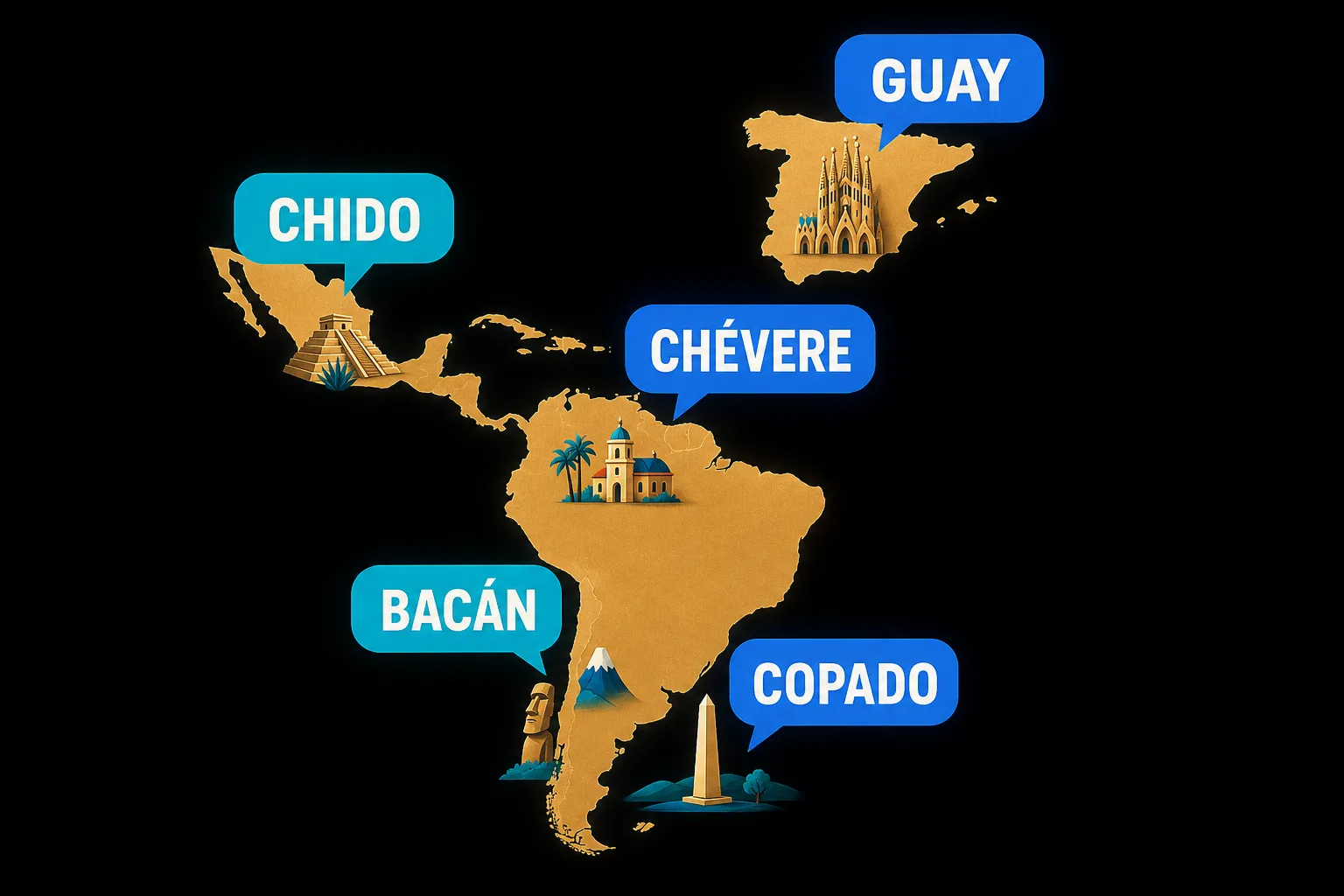
My first Spanish word for cool was chido, picked up in a Mexico City taquería. Six months later I used it in Madrid and my flatmate laughed for a solid minute. Spanish has no single word for cool. Every country grew its own, and using the right one instantly marks you as someone who actually listens.
Before the slang, the safety net. ¡Genial! (Great!) and ¡Qué bueno! (How nice!) are standard Spanish. Everyone understands them in every country. The ten words below are what locals actually say.
Quiz ahead: A six question quiz at the end checks whether you can tell your guay from your bacán. Question 4 trips up almost everyone.Spain: guay and chulo
Guay is the default cool in Spain, and only in Spain. In Madrid you will hear it every thirty seconds. ¡Qué guay tu chaqueta! (Your jacket is so cool!) Say it in Latin America and people will know exactly where you learned your Spanish.
Chulo covers cool and cute at the same time: Este bar es muy chulo. (This bar is really cool.)
Watch out:
- In Spain, chulo describing a thing means cool or cute. Totally safe.
- In Mexico and much of Latin America, un chulo is a pimp, and calling a person chulo can mean cocky. Keep the word for objects, and keep it in Spain.
Mexico and Central America: chido, padre, tuanis
Mexico runs on chido, and it agrees like any adjective: La fiesta estuvo bien chida. (The party was really cool.)
Padre literally means father, and Mexicans use it for cool anyway: ¡Qué padre tu moto! (Your bike is so cool!) Nobody is thinking about dads, promise.
Down in Costa Rica the word is tuanis: ¡Qué tuanis la playa! (The beach is so cool!) Ticos will tell you it comes from the English "too nice". Linguists doubt it, locals repeat it anyway, and it makes a great icebreaker either way.

Reading is step one. Speaking is what makes it stick.
Practice this in a real conversation, with instant feedback.
Colombia, Venezuela and the Caribbean: chévere and bacano
Chévere was born in Venezuela and is at home in Colombia, Ecuador, Peru and most of the Caribbean: ¡Qué chévere verte! (How cool to see you!) It is the closest thing Latin America has to a universal cool, so when in doubt south of Mexico, reach for this one.
Colombia adds bacano: Tu apartamento es muy bacano. (Your apartment is really cool.) When a paisa rates your travel plan as bacano, that is a genuine compliment. The word carries real warmth.
Argentina and Chile: copado, piola, bacán
Argentines say copado: Qué copado tu plan. (Your plan is so cool.) Its quieter cousin is piola, cool in a relaxed, low-key way: Tranqui, es un lugar piola. (Relax, it is a chill place.) A person can be piola too, meaning easygoing with a bit of street smarts.
Cross the Andes and Chile answers with bacán, which also lives in Peru and Cuba: ¡Bacán! Nos vemos a las nueve. (Awesome! See you at nine.) On its own it works as an enthusiastic yes.
Don't just memorize it. Say it out loud today.
Nativia turns what you just read into real conversations.
Test yourself
Pick what a local would actually say, then check your answers.
Match the word to the country, then check your answers.
1.En Madrid: ¡Qué tu chaqueta!
In Madrid: Your jacket is so cool!
2.A friend in Medellín says: ¡Qué bacano tu apartamento! What do they mean?
3.En Buenos Aires: Qué tu plan.
In Buenos Aires: Your plan is so cool.
4.In which country can you safely call a bar chulo?
5.Your Chilean friend replies ¡Bacán! when you suggest the beach. What happened?
6.En Costa Rica: ¡Qué la playa!
In Costa Rica: The beach is so cool!
The cheat sheet
Every word from this guide in one place, ready to save for your next trip.
How to say cool in Spanish
| Word | Where you'll hear it | Example |
|---|---|---|
| genial | Everywhere (standard Spanish) | ¡Genial! (Great!) |
| guay | Spain | ¡Qué guay tu chaqueta! (Your jacket is so cool!) |
| chulo | Spain, for things only | Este bar es muy chulo. (This bar is really cool.) |
| chido / chida | Mexico | La fiesta estuvo bien chida. (The party was really cool.) |
| padre | Mexico | ¡Qué padre tu moto! (Your bike is so cool!) |
| tuanis | Costa Rica | ¡Qué tuanis la playa! (The beach is so cool!) |
| chévere | Venezuela, Colombia, Ecuador, Peru, Caribbean | ¡Qué chévere verte! (How cool to see you!) |
| bacano | Colombia | Tu apartamento es muy bacano. (Your apartment is really cool.) |
| bacán | Chile, Peru, Cuba | ¡Bacán! Nos vemos a las nueve. (Awesome! See you at nine.) |
| copado | Argentina | Qué copado tu plan. (Your plan is so cool.) |
| piola | Argentina | Es un lugar piola. (It is a chill, cool place.) |
Learn how people actually talk
Textbooks won't teach you this. In Nativia, the characters speak with real accents and real slang. Start talking with them today.
FAQ
What is the most universal word for cool in Spanish?
Genial works in every country because it is standard Spanish. Among the slang options, chévere has the widest reach across Latin America, though it sounds foreign in Spain and Argentina.
Will people understand me if I use the wrong country's slang?
Almost always yes. Spanish speakers watch shows and follow creators from other countries, so saying guay in Bogotá gets a smile, not confusion. The only word that needs real care is chulo, because of its pimp meaning outside Spain.
Is guay used in Latin America?
No. It is understood from Spanish TV and movies, but nobody says it. If you learned Spanish from a Spain-based course, swapping guay for chévere or the local word is one of the fastest ways to sound more natural on a Latin America trip.
Keep reading
12 Mexican Slang Words You'll Actually Hear Every Day
Learn 12 Mexican slang words locals really use, from güey to ahorita, with real dialogue lines, cross-country warnings, and a quick self-test quiz.
7 Spanish False Friends That Will Embarrass You
Embarazada does not mean embarrassed. Learn 7 Spanish false friends that trip up English speakers, with fixes, memory hooks, and a self-test quiz.
At the Pharmacy in Spanish: Phrases for When You Feel Sick
Learn the Spanish you need at the pharmacy: describe your symptoms, understand the pharmacist's questions, and get the right medicine with confidence.